
Contents
The noodles arrived in a pool of crimson.
I had been in Chongqing exactly forty-seven minutes. My Mandarin extended to “hello,” “thank you,” and “where is the bathroom”—none of which had prepared me for the small woman standing over me, arms crossed, watching to see if I would survive what she’d just served.
The bowl of xiao mian glistened with chili oil. Crushed peanuts floated like islands. Spring onions spiraled through the broth, and somewhere beneath the surface, noodles waited to betray me. I picked up my chopsticks.
The woman didn’t move.
I took a bite.
The heat didn’t arrive immediately. First came the savoury depth, the slippery texture of fresh noodles, the crunch of peanuts. Then—slowly, inevitably—the mala bloomed across my tongue. Ma: the numbing prickle of Sichuan peppercorn, like touching a battery to your taste buds. La: the fire that followed, spreading from my lips to my throat to somewhere behind my eyes.
I reached for my water.
The woman made a sound that might have been disappointment or might have been amusement. I couldn’t tell. I was too busy trying to remember how to blink.
That was my introduction to Chongqing—a city that doesn’t ease you in. It grabs you by the collar and dares you to keep up.
The City That Doesn’t Sleep. It Glows.
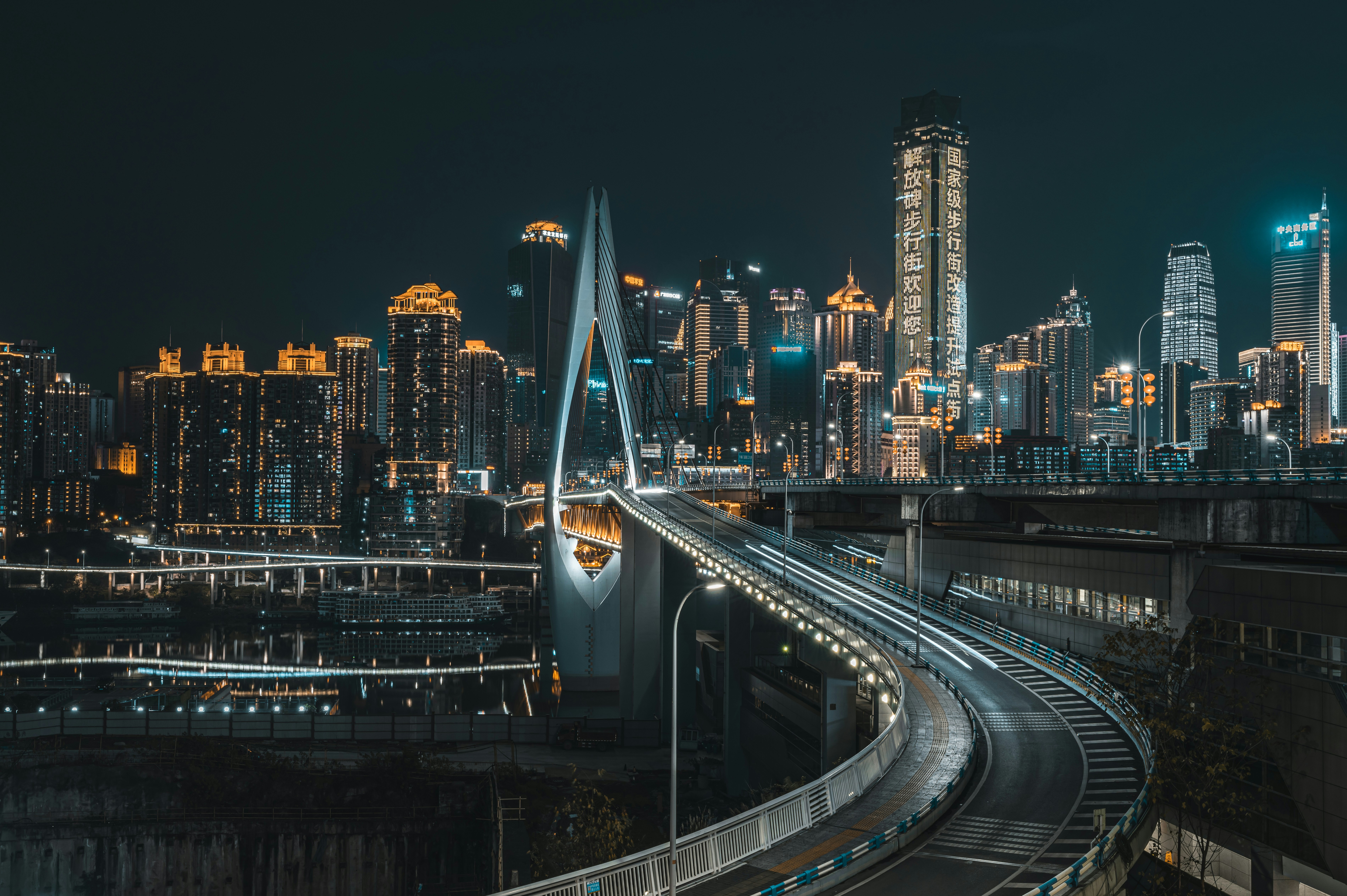
From the airport bus window, Chongqing looked like someone had taken a normal city and folded it in half, then folded it again. Highways stacked six layers deep. Skyscrapers perched on cliffs. Bridges threaded between towers like someone had started a sentence and forgotten to finish it.
Two rivers carved through the urban mass—the Yangtze, brown and heavy with history, and the Jialing, grey-green and quick. Where they met, the city rose in a wall of glass and steel, illuminated so aggressively that at 10 PM, it looked like noon on another planet.
I had come for two things: the cityscape and the food. Chongqing promised both in quantities I wasn’t prepared for.
First Night: Falling Into the Cyberpunk Glow
By late afternoon, I was standing in Jiefangbei, the pedestrian heart of the city. The Liberation Monument rose in the centre like a concrete lighthouse, surrounded by LED billboards so bright they cast shadows. Office workers streamed onto the streets, their faces blue-lit by screens, their footsteps synchronized to some rhythm I couldn’t hear.
Everywhere I looked: signs for noodles, skewers, hotpot. Characters I couldn’t read. Steam rising from metal trays. People eating standing up, sitting down, walking. The city moved like it was late for something important.
After the noodle incident, I needed air.
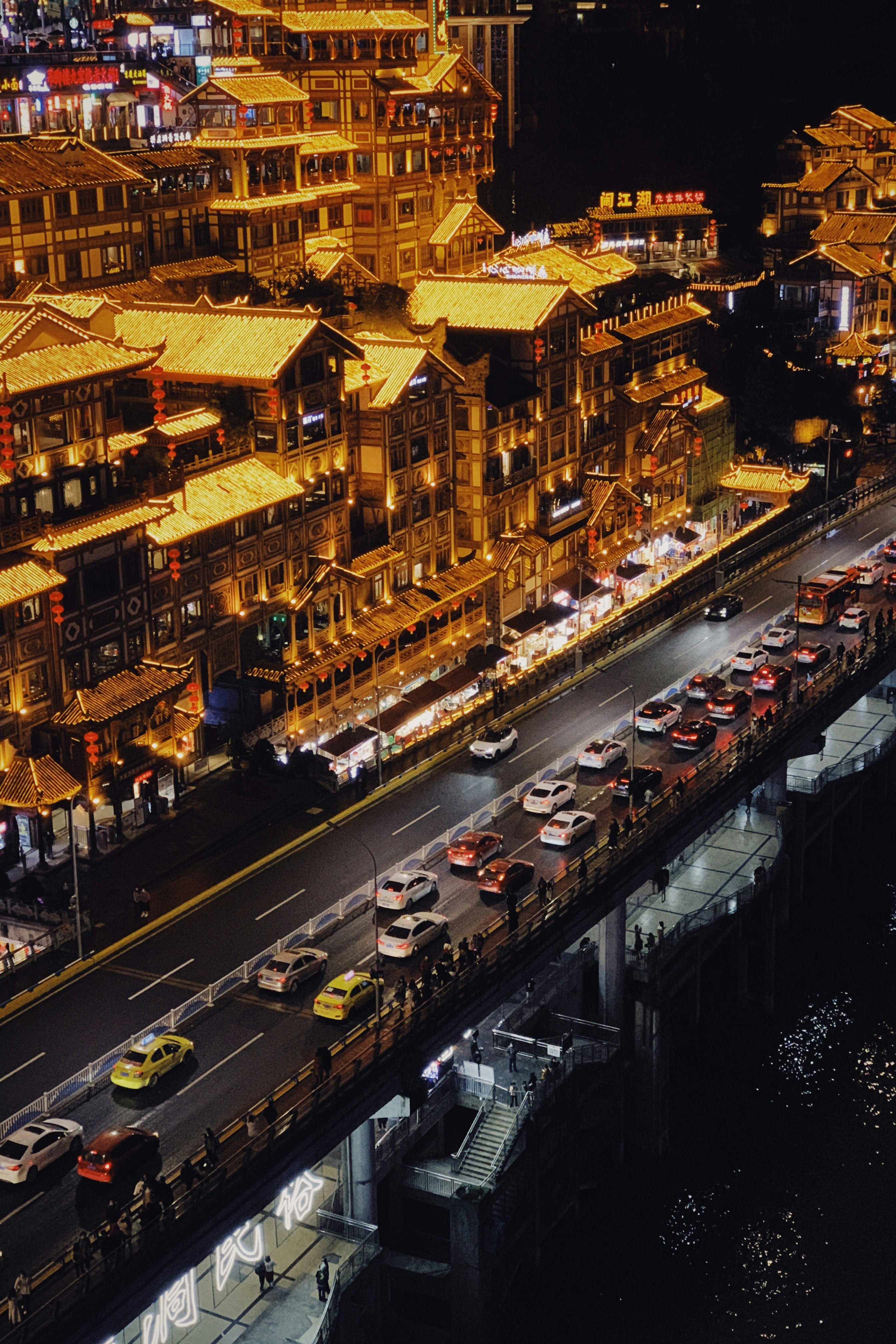
I walked toward Hongya Cave, following a river of people through streets that kept climbing upward. The air smelled like grilled meat, caramelized sugar, and the faint sourness of river water. Somewhere ahead, I could see light—gold and red and white—spilling across the sky.
Then Hongya Cave appeared.
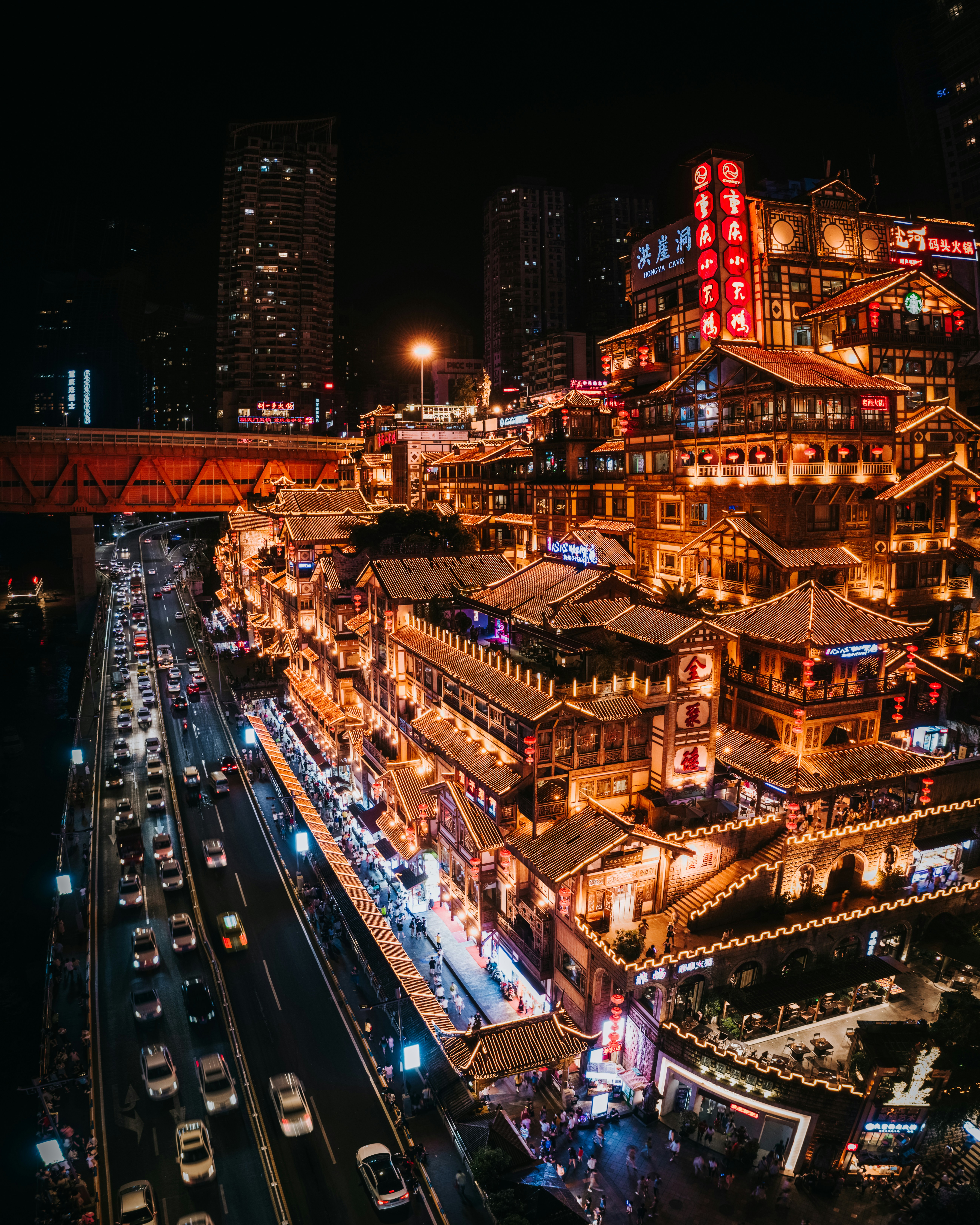
Imagine a building. Now imagine it’s nine buildings, stacked on top of each other, built into the side of a cliff overlooking a river. Now imagine every balcony glowing with red lanterns, every wooden walkway crowded with people eating and laughing, and behind it all—a highway cutting through the air, a monorail sliding between towers, a skyline of glass rising like a frozen wave.
It looked like something from a fever dream. Like anime made real. Like a city that had learned to grow upward because it had run out of ways to grow outward.
I found a spot on a balcony and ordered skewers—lamb dusted with cumin, chicken wings blistered by charcoal, and something the vendor only described as “don’t ask, just eat.” I didn’t ask. The city roared beneath us: cars crossing the bridge, boats passing under, people shouting to each other through the static of traffic.
Later, I walked onto Qiansimen Bridge.
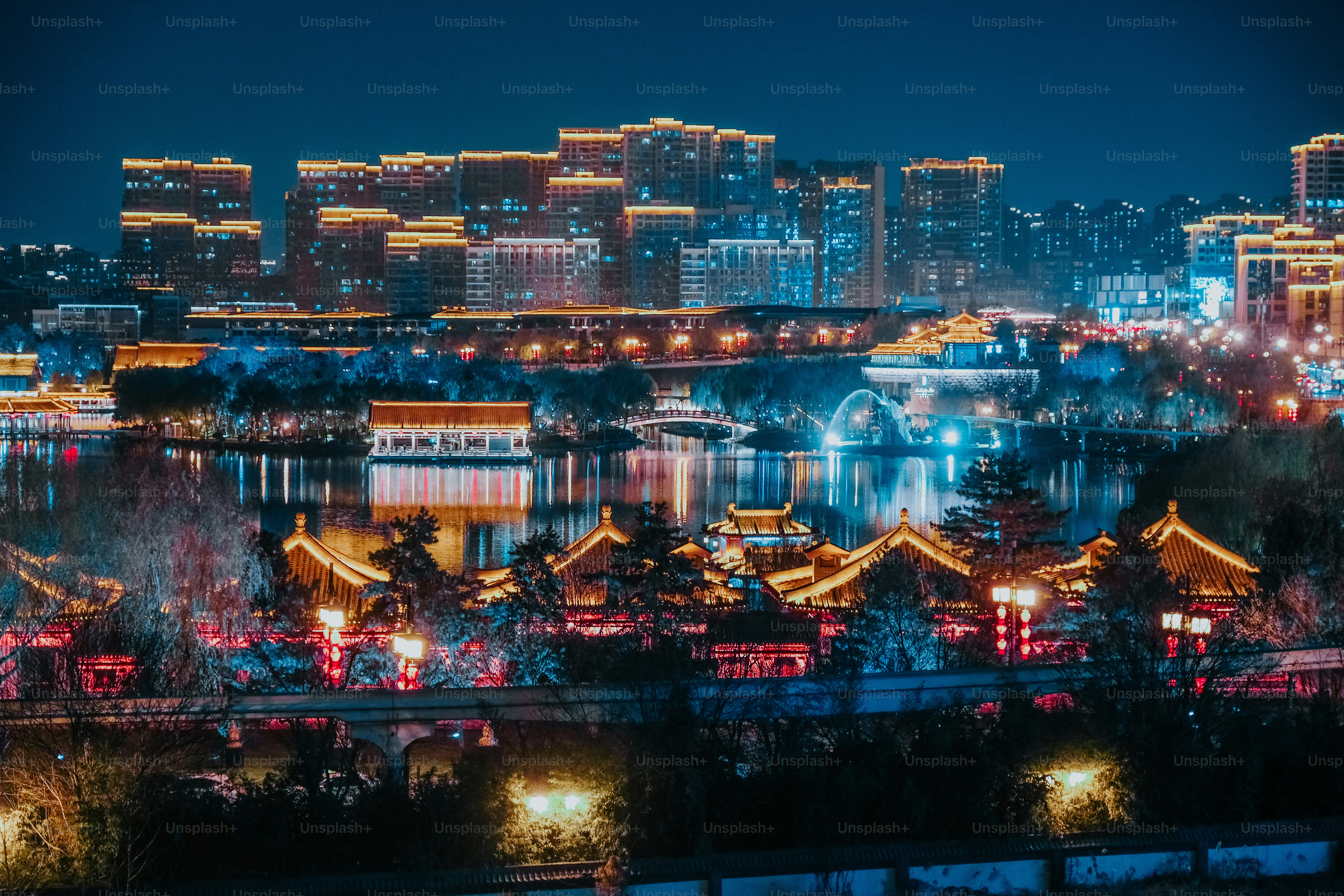
The wind came rushing up from the river, carrying cold air and the memory of spice. On one side, Hongya Cave burned gold. On the other, the skyline rose like a wall of light. Between them, the water reflected everything back—doubled, shimmering, broken by the wake of passing boats.
I stood there for a long time. A group of teenagers walked past, laughing, taking photos. An old man leaned against the railing, smoking, not looking at anything in particular. Somewhere below, a boat horn sounded, low and lonely.
I felt very small. Very awake. Very far from home.
The Hotpot Baptism
That night, I ended up at a hotpot restaurant near Jiefangbei. The place was packed—round tables crowded with groups of friends, the air thick with steam and shouting. Waiters navigated between chairs with impossible grace, carrying trays piled high with raw meat, vegetables, and things I couldn’t identify.
I chose a table and ordered the half-and-half broth: one side a gentle clear soup, the other a deep red lake filled with dried peppers and peppercorns so thick they formed a floating carpet. The pot sat in the centre of the table, bubbling like a witch’s cauldron, and I realised I had no idea what I was doing.
Across from me, a couple was already halfway through their meal. The man noticed my confusion—my hand hovering over the dipping sauces, my eyes darting between ingredients I couldn’t name—and he said something to his companion. She looked over, assessed the situation, and made a decision.
Five minutes later, they had moved to my table.
“First time?” the man asked in Mandarin. His tone was kind, his expression patient. I nodded.
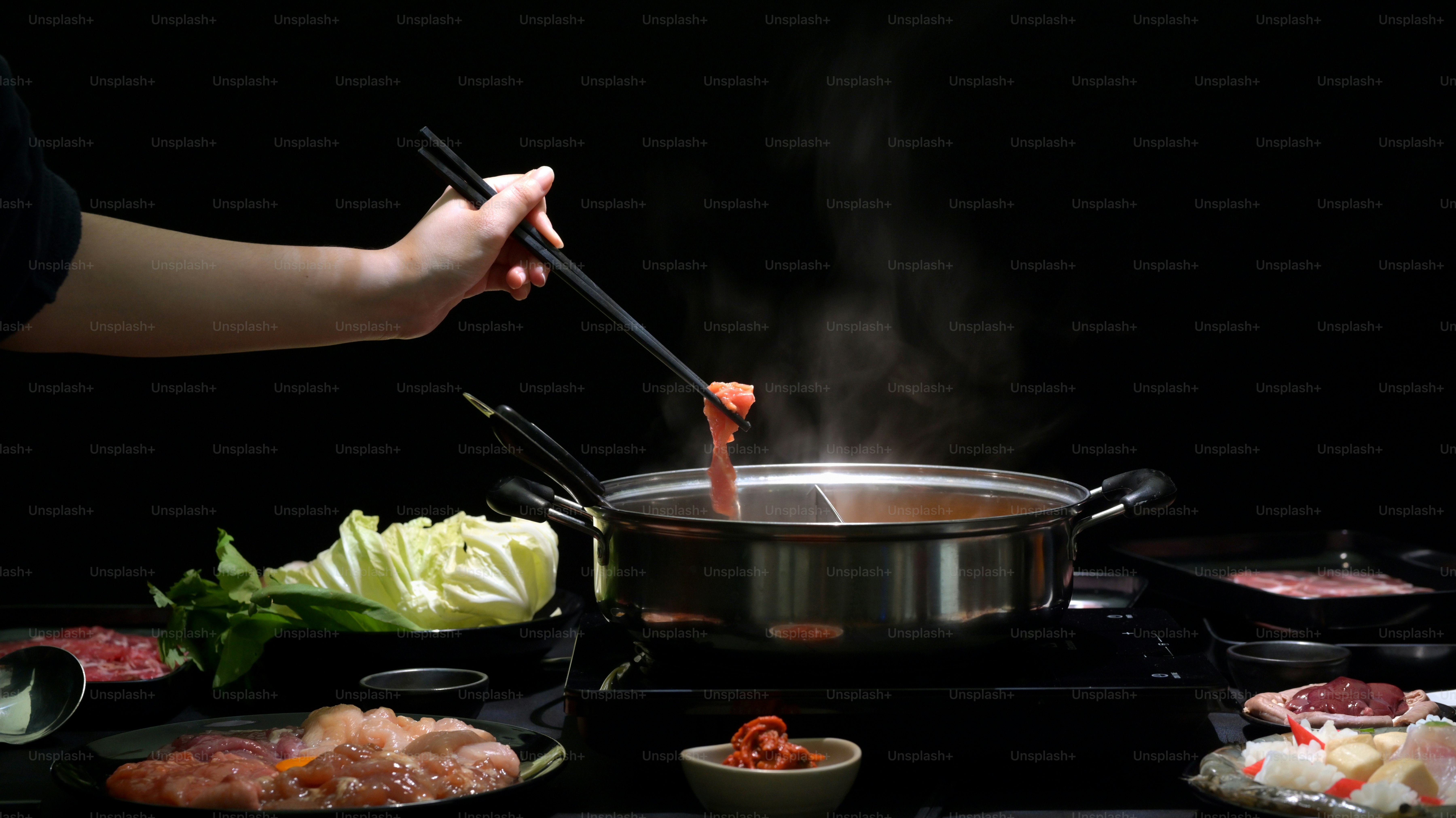
What followed was a masterclass in survival. They ordered for me—thinly sliced beef, tripe that looked like a wet towel, duck blood (which I didn’t know was a thing), lotus root, tofu skin, mushrooms, and vegetables I couldn’t name. They explained the dipping sauces: sesame oil to cool the heat, garlic for depth, vinegar to cut the richness. They showed me how to cook each piece—tripe needs only seconds, beef a little longer, vegetables until they stop fighting back.
The woman, whose name I never learned, watched me like a hawk. Every time I reached for the chili side of the pot, she would shake her head. “Not yet,” her expression said. “Build up to it.”
The man, who introduced himself as Wei, kept up a running commentary. “In Chongqing, the rule is simple,” he said, dropping a piece of beef into the red lake. “If it can go in the pot, it probably already has. We eat everything here. Nothing goes to waste.”
When I finally reached for the chili side—defiant, stubborn, American—the woman didn’t stop me. She just smiled.
I pulled out a piece of beef, now stained red with oil and studded with peppercorns. I dipped it in sesame oil. I ate it.
The heat arrived like a train.
My tongue went numb. My lips tingled. Sweat broke out across my forehead. I reached for my drink, eyes watering, and when I looked up, they were both grinning.
“You survived,” Wei said. “Now you’re ready for the real meal.”
By the time I stumbled back to my hotel, my clothes smelled like smoke and spice, my tongue still buzzed with the memory of peppercorns, and I understood something I hadn’t before: Chongqing hotpot isn’t just food. It’s a ritual. A test. A communal act of courage that bonds strangers over bubbling oil.
Second Day: A City in Three Dimensions
The next morning, the sky hung low and grey over the city. Mist clung to the upper floors of skyscrapers, turning them into ghost towers. But Chongqing in the fog has its own beauty—it softens the edges, muffles the noise, makes the city feel like a secret.
I headed for the Yangtze River Cableway.
The cable car station was packed with tourists, families, and a few old men who looked like they did this ride every week just to remember how their city looked from above. I squeezed into a cabin with twenty other people, and the doors hissed shut.
We slid out over the river.
Below, boats pushed slowly through brown-green water. Ahead, towers rose straight from the riverbank, highways tangled like headphones in a pocket, laundry hung from balconies five hundred feet in the air. The whole city felt like a multi-layered game map—a place where up and down had lost their meaning.
Halfway across, the cabin went quiet. Everyone turned toward the windows. The mist parted, and Chongqing unfolded around us: layer upon layer of concrete and glass, stacked and interlocked, roads cutting through buildings, buildings built on top of other buildings, the entire structure seeming to defy gravity.
I understood, in that moment, why this city feels like science fiction. It’s not just the neon or the scale. It’s the verticality. Chongqing doesn’t spread outward like other cities—it grows upward, always upward, as if the ground itself is trying to touch the sky.
The Train That Lives in a Building
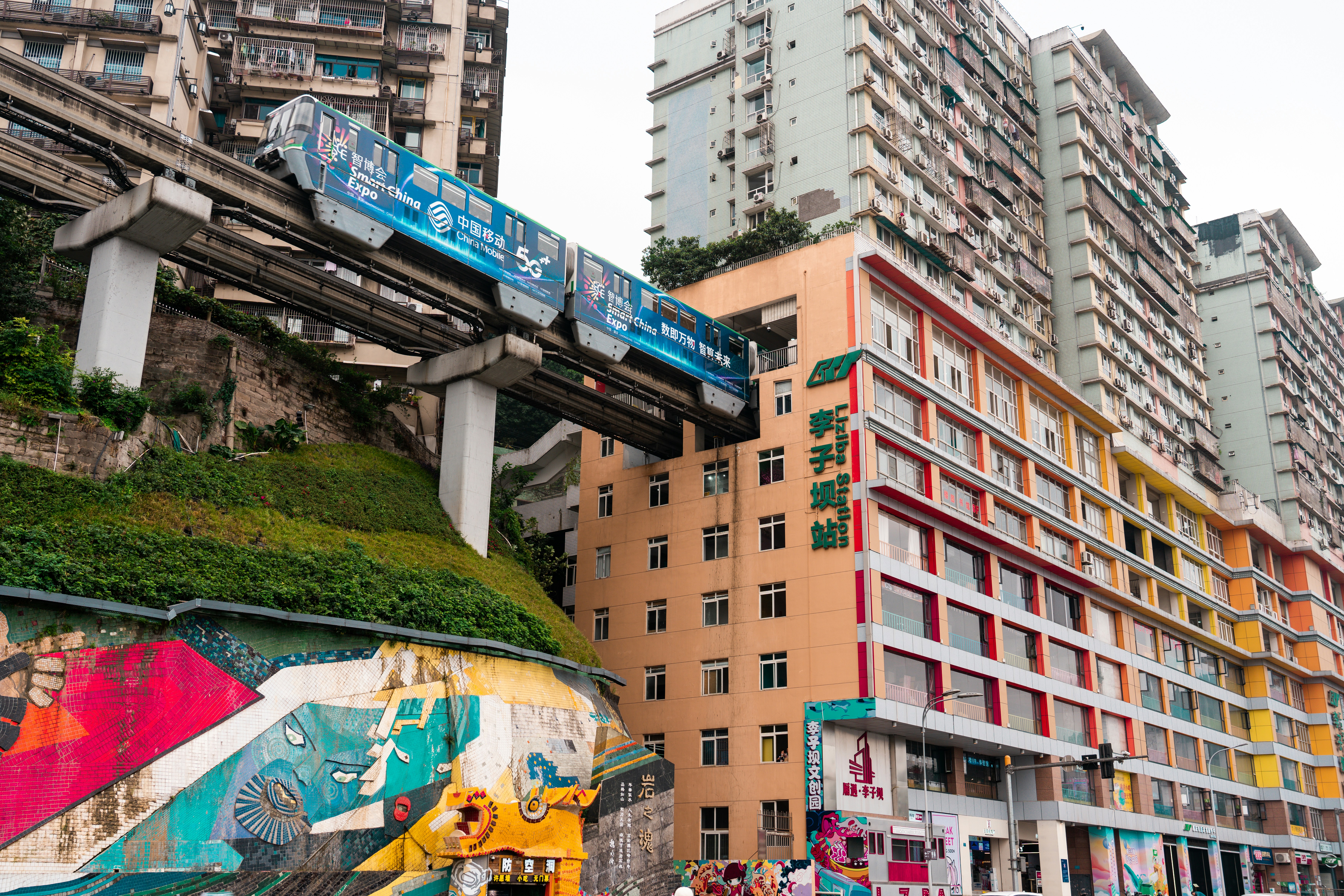
My next stop was Liziba Station—the monorail that famously passes through the middle of an apartment building. I had seen the photos. I thought I was prepared.
I was not prepared.
Standing on the sidewalk below, I could see people hanging laundry from their windows while, every few minutes, a train roared straight through the building like it belonged there. The sound echoed off concrete, and for a second, the entire structure seemed to hum.
When the train came, it slid into the building’s sixth floor with the casual grace of something that had done this a million times. The windows of apartments flickered past—someone watching TV, someone cooking dinner, someone just sitting there, living their life with a monorail running through their living room.
There was an old woman selling fruit near the viewing platform. I bought a bag of sliced pineapple and asked, in my broken Mandarin, whether the noise bothered people.
She laughed—a sound like dry leaves.
“When it first opened, everyone complained,” she said. “But now, if the train stopped, we’d complain more. It’s like a heartbeat. You don’t notice it until it’s gone.”
I looked up at the building again. Somewhere inside, a train was carrying people to work, to home, to somewhere I would never know. And somewhere inside, someone was eating breakfast with a view of the tracks.
Night Markets and the Tastes of Memory
By evening, my feet ached, but the day wasn’t over. I took the metro toward Jiaochangkou Night Market, where the streets transformed into a maze of sizzling grills and steam clouds.
Here, the city’s stories were written in food.
I moved from stall to stall—grilled skewers of chicken wings blistered over charcoal, lamb coated with cumin, skewered potatoes brushed with chili oil. Every vendor had a rhythm: one man flipping skewers with musical timing, another shouting orders in a hoarse voice that somehow never cracked.
At one stall, I joined a short line for a dish I couldn’t identify. The vendor pulled thin slices of beef from a metal tray, tossed them into a spicy broth, then served them over rice with green onions.
The man ahead of me, seeing my confusion, leaned back.
“First time in Chongqing?” he asked in English.
I nodded.
“Then you don’t leave until you’ve tried three things,” he said, gesturing at his bowl. “Hotpot. Xiao mian. And whatever this is.” He took a bite. “We don’t have a famous name for it. It’s just what you eat when you’ve had a long day and your boss is annoying.”
We ended up sharing a small plastic table. His name was Chen, he worked in an office nearby, and he came to this market at least twice a week. As we ate, he pointed out different stalls—this one for duck necks, that one for fried rice cakes, another for cold spicy noodles.
“See that stall?” he said, pointing to an older woman working alone. “My mother used to bring me there when I was a kid. Same woman. Same taste. Only the prices changed.”
Later that night, I found a stall selling sugar-coated hawthorns—bright red fruit on a stick, glossy with hardened sugar. A little boy tugged at his mother’s sleeve, begging for one. She sighed, bought two, and when she caught me smiling at them, she held up the second stick.
“For you,” she said in Mandarin.
I shook my head, but she insisted.
So I walked through the night market with that sweet-sour taste in my mouth, sticky sugar on my fingers, and the feeling that in this loud, crowded, impossible city, people still made room for small kindnesses. That they wanted to share something—not just food, but the experience of being alive in a place that demanded everything from you and gave everything back.
Third Day: Where the Past Still Lives
On my last day, I needed to breathe. The city’s intensity had seeped into my bones—the neon, the noise, the constant vertical movement—and I wanted to find the Chongqing that existed before the skyscrapers.
I took the metro to Ciqikou Ancient Town.
As soon as I stepped out of the station, the modern city fell away. Narrow stone streets climbed between old wooden houses, red lanterns swinging overhead in the morning breeze. The smell of grilled fish, fresh tea, and baked pastries wrapped around every corner.
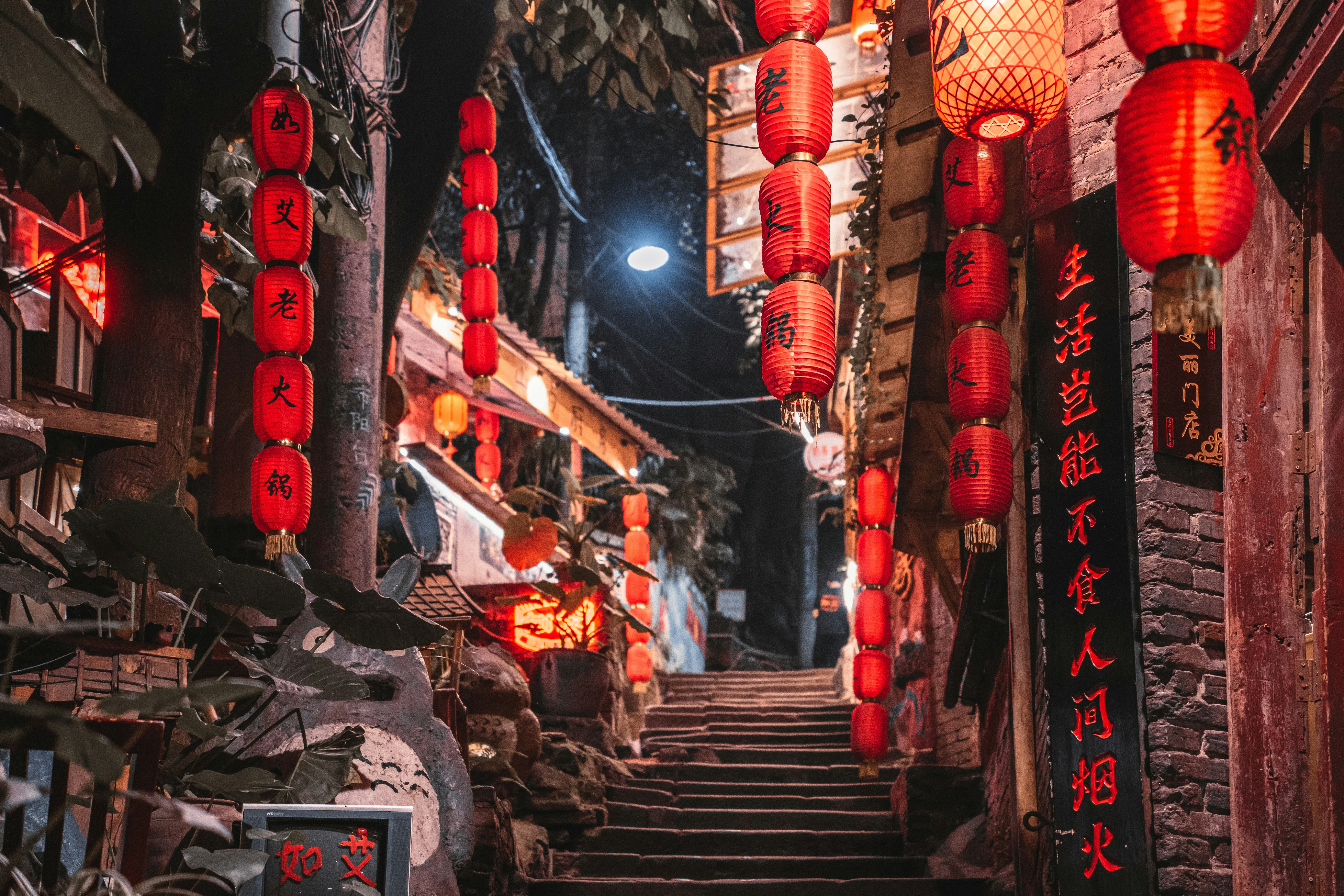
Vendors called out softly as people passed: herbal candies, roasted nuts, spicy tofu, little cakes shaped like animals. I stopped at a teahouse with creaking wooden floors and sat by an open window, sipping floral tea while looking down at the river. Outside, the city’s roar was reduced to a distant murmur. Time moved differently here—slower, gentler.
In one alley, I found an old man making mahua—twisted strands of dough, braided and fried, then dipped in syrup. He worked with practiced movements, his hands moving so quickly the dough blurred. When he handed me a warm, sticky piece, he smiled.
“This is how we remember old Chongqing,” he said. “The city changes. Some flavours don’t.”
Where Two Rivers Meet
As afternoon faded, I headed toward Chaotianmen, where the Jialing and Yangtze rivers converge. Here, bridges crisscross like threads in a loom. Modern towers, including the Raffles City complex, lean forward over the water as if the city itself is reaching for something beyond the horizon.
I sat on the steps near the river’s edge as the lights came on, one by one. Boats turned into floating restaurants, their windows glowing amber. Spotlights traced lines in the sky. Reflections rippled in the water below, doubling the city, making it seem infinite.
In front of me, children chased each other up and down the steps, their laughter carrying across the water. Behind me, someone was selling instant noodles from a portable stand, the aroma of cheap spices mixing with the cool river air. An old couple walked past, holding hands.
As night settled in, I thought about what the fruit seller had said about the train. Chongqing felt like that—a city that had become its own heartbeat. Trains cutting through buildings. Cable cars gliding over rivers. Escalators climbing hills. Crowds flowing through neon-lit streets. Constant motion, constant energy, constant life.
And yet, between the noise and the lights, there were quiet moments: a bowl of noodles in a side alley, a shared fruit stick at a night market, tea in a creaking old house, the wisdom of a man making fried dough.
Leaving, But Still Tasting Chili
On my last morning, as the taxi climbed a hill toward the station, I looked back at the tangled skyline. The city appeared and disappeared between buildings, playing hide-and-seek with itself.
My tongue still carried the memory of chili and peppercorns. My clothes still smelled of smoke and spice. My phone was full of photos that couldn’t capture what I’d seen.
Chongqing had given me what I came for—towering cityscapes and unforgettable food. But it also gave me something I hadn’t expected: stories. Of a couple who adopted a confused traveller for a hotpot dinner. Of an old woman who measured her life by the rhythm of a train. Of a man who found comfort in a nameless bowl of beef over rice after a hard day at work.
The taxi crested a hill, and for a moment, the entire city spread out before me—a maze of light and concrete, rising and falling like breath, alive in a way I had never seen a city be alive before.
If you love places that feel like living organisms, if you’re willing to sweat over a bowl of noodles while the skyline glows outside, if you want to feel small and alive at the same time—Chongqing will stay with you.
Long after you’ve left, you’ll find yourself reaching for chili oil. You’ll hear trains in your dreams. You’ll remember what it felt like to stand on a bridge between two rivers, watching a city that never stopped moving, never stopped growing, never stopped being exactly what it was:
A place where the impossible became routine. Where fire lived in the food and light lived in the air. Where the only rule was to keep up—or get out of the way.
And somewhere, in a tiny noodle shop down a side alley, a small woman is still watching. Waiting to see if you can handle the heat.
Share this story


